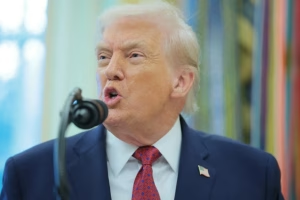
President Donald Trump Signed travel ban on 12 countries, citing national security risks.
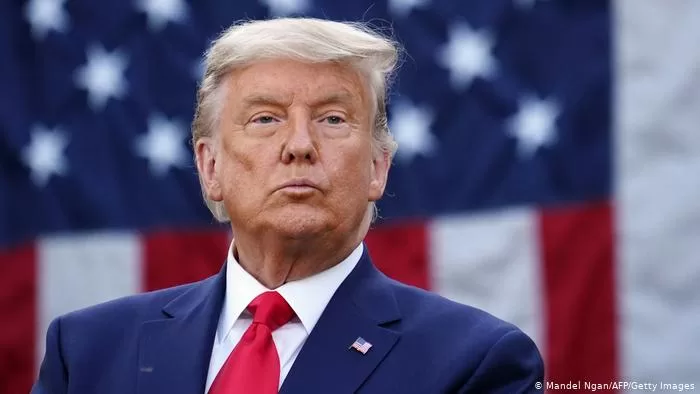
U.S President Donald Trump on Wednesday signed a proclamation banning citizens from 12 countries from entering the United States, citing the need to protect against “foreign terrorists” and other security threats.
Countries are affected:
Trump has signed a proclamation banning travel to the US from nationals of 12 countries:
Afghanistan
Myanmar
Chad
Congo-Brazzaville
Equatorial Guinea
Eritrea
Haiti
Iran
Libya
Somalia
Sudan
Yemen
Nationals from these countries will not be allowed to enter the US unless they qualify for an exemption.
There are an additional seven countries whose nationals face partial travel restrictions:
Burundi
Cuba
Laos
Sierra Leone
Togo
Turkmenistan
Venezuela
Those under the partial restrictions will not be able to travel to the US with certain visas.
The ban takes effect on Monday at 00:01 EDT (04:01 GMT), a cushion that avoids the chaos that unfolded at US airports when a similar measure took effect with virtually no notice eight years ago.
No end date has been provided. The order calls for periodic review.
He cited a recent incident in Boulder, Colorado, involving an Egyptian national with an expired visa, as an example of why such restrictions are necessary, despite Egypt not being on the current list of restricted countries.
The proclamation has drawn immediate international reaction. Somalia’s ambassador to the United States, Dahir Hassan Abdi, pledged cooperation, stating, “Somalia values its longstanding relationship with the United States and stands ready to engage in dialogue to address the concerns raised.”
In contrast, Venezuelan Interior Minister Diosdado Cabello, a close ally of President Nicolas Maduro, described the U.S. government as fascist and warned Venezuelans of the risks of being in the U.S., alleging persecution.
Myanmar’s military government spokesperson did not immediately respond to requests for comment, nor did Pakistan’s foreign ministry regarding the thousands of Afghans awaiting U.S. resettlement in Islamabad.
A 31-year-old Myanmar teacher, currently in Thailand, expressed concern that the ban threatens her participation in a U.S. State Department exchange program slated for September.
International Reactions and Humanitarian Concerns
The latest travel restrictions follow Trump’s executive order on January 20, requiring intensified security vetting of foreigners, and previous reports in March that his administration was considering travel restrictions on dozens of countries.
Outlook: Geopolitical Tensions, Immigration Policy, and Economic Implications:
President Trump’s broad travel ban is set to escalate geopolitical tensions and spark widespread debate on immigration policy, national security, and humanitarian concerns.
The move signals a continued hardline approach to U.S. border and entry controls, potentially impacting international travel, business, and educational exchange with the targeted nations.
Beyond the immediate social and political ramifications, the restrictions could have economic implications for sectors reliant on international travel and for the broader global flow of talent.
The policy’s legality and its practical implementation will likely face scrutiny both domestically and internationally, similar to the challenges encountered during his first term.