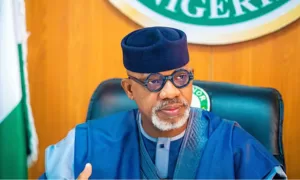
Minimum Wage : Ajaero Raises Alarm Over Plot To Weaken, Divide Labour

President of the Nigeria Labour Congress (NLC), Joe Ajaero, has raised the alarm over alleged attempts by forces opposed to workers’ interests to divide organised labour ahead of negotiations for a new national minimum wage.
Ajaero warned that the alleged plot involving the spread of rumours, exploitation of differences among unions and attempts to set workers against one another was aimed at weakening labour’s bargaining power and sabotaging the struggle for improved wages.
He urged trade unions to remain vigilant and united, insisting that the movement must resist any attempt to compromise its collective position before negotiations begin.
The NLC president who spoke at the 22nd edition of the Congress’ Annual Harmattan School 2026, themed ‘Organising in the Context of Socio-Economic Transformation’, noted that the prevailing economic difficulties confronting Nigerian workers demanded stronger organisation, political consciousness and ideological clarity.
He said: “As we prepare to negotiate a new national minimum wage, we want to draw your attention to the fact that the enemies of the labour movement are already at work. Their strategy is as old as it is dangerous: divide us, weaken our resolve and sabotage upcoming national minimum wage negotiations before they even begin.
“They will spread rumours, exploit our differences and seek to set one union against another, one worker against another. However, we must see this plan for what it is, an attempt to rob Nigerian workers of the decent wage they deserve.”
Ajaero maintained that labour’s strength rested on its unity, urging union leaders to present a common front and ensure that the forthcoming negotiations delivered meaningful improvements in workers’ living conditions.
He also called on the Federal Government to honour the October 27, 2026 agreement reached with organised labour, particularly provisions concerning the N70,000 transport allowance and establishment of a tripartite standing wage review committee.
The NLC president said government must demonstrate commitment to collective bargaining by ensuring that agreements reached with workers were implemented rather than treated as political conveniences.
“Agreements cannot become matters of convenience that are respected only when politically convenient,” he said, urging state governments and private-sector employers to implement the relevant commitments.
On the worsening cost-of-living crisis, Ajaero said Nigerian workers were struggling to meet the rising costs of food, transportation, housing, healthcare and education, warning that wages disconnected from the realities of household expenditure could not guarantee decent living conditions.
“The question before us, therefore, is not only simply how much workers take, but whether workers can live decently from their earnings.”
He argued that the success of economic reforms should not be determined solely by macroeconomic indicators but also by their impact on workers, pensioners, unemployed young people, small business owners and vulnerable households.
Ajaero also challenged labour leaders to demonstrate ideological clarity, warning against defending economic policies such as privatisation and deregulation without considering their consequences for working people.
According to him, the market cannot automatically be considered an ally of workers, stressing the need for state intervention to protect public interests and guarantee economic fairness.
He said workers’ education must extend beyond trade union constitutions and industrial relations procedures to equip members with knowledge of economic policies, taxation, social protection, democratic governance, technology, climate change, migration and the changing nature of employment.
The NLC president further urged Nigerian workers to take an active interest in the 2027 general elections, insisting that political campaigns should focus on concrete programmes addressing unemployment, wages, healthcare, education, insecurity, food production, infrastructure and workers’ welfare.
“As we approach the 2027 general election, we must insist that campaigns should be issue-based, not a contest of sentimentality, slogans, petty calculations or empty promises.”
He called on the Independent National Electoral Commission (INEC) to ensure transparency in voter registration and other electoral processes, adding that workers must interrogate political programmes and demand accountability from political candidates.
Ajaero said organised labour had responsibilities beyond the workplace, including defending democracy, social justice, equality and human dignity, while calling for stronger collaboration with civil society organisations.
Earlier, the International Labour Organisation’s (ILO) Country Director, Vanessa Phala, described the Harmattan School as an important platform for strengthening the labour movement, promoting social dialogue and developing common policy positions on issues affecting workers.
Phala said the 22nd edition provided an opportunity to consolidate lessons and experiences accumulated over the years, urging the NLC to document discussions and outcomes from the annual programme to preserve institutional knowledge for future generations of trade union leaders.
She described the theme as timely, given the rapid transformation of the world of work and the emerging challenges confronting workers.
The ILO official disclosed that the organisation was supporting capacity-building initiatives for workers’ organisations in Nigeria and about 22 other African countries, particularly in developing research mechanisms and strengthening their participation in living wage policy discussions.
She explained that living wage determination must be evidence-based, taking into consideration the needs of workers and their families, while balancing the economic realities and sustainability of enterprises.
Phala also stressed the importance of consultations involving all relevant stakeholders, describing organised labour as a critical participant in establishing a credible living wage framework.
She reaffirmed the ILO’s commitment to providing technical support to the Nigerian labour movement and helping translate discussions at the Harmattan School into practical outcomes.