

Insurgency: CDS Calls on FG to Bolster Police, Civil Defence
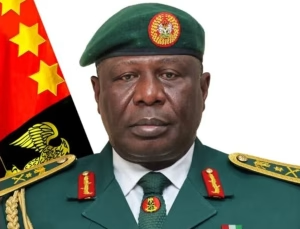
The Chief of Defence Staff (CDS), General Olufemi Oluyede, has called on the Federal Government to deliberately strengthen the capacity of officers and men of the Nigeria Police Force and the Nigeria Security and Civil Defence Corps (NSCDC) in the ongoing fight against insurgency.
General Oluyede made the call on Tuesday during the 2025 budget performance review and the defence of the 2026 budget proposal at the National Assembly Complex, Abuja.
The CDS, who appeared before the House of Representatives Committee on Defence alongside senior military officers, was received by the committee chaired by a Lagos lawmaker, Babajimi Benson.
In his opening remarks, General Oluyede assured that the Armed Forces, on behalf of the Federal Government, remain committed to making every part of the country safer for living and business in 2026 and beyond.
He noted that Nigeria’s security situation has recorded improvements in the North-East, while acknowledging persistent challenges in the North-West and parts of the North-Central region.
He said, “The Armed Forces of Nigeria can’t cover everywhere. It’s important for us to enhance the capacity of other security agencies, especially the police force and the civil defence corps. This is because they have more men and better reach. It’s important for us to ensure that these institutions are strengthened for Nigeria to be safer.
“If you go by the strength of the Armed Forces, it is not possible for us to deploy our men everywhere in Nigeria. I’m emphasising the fact that these institutions need to be strengthened generally, so that where we have cleared, these other agencies can cover those gaps for us, because, as we speak, what we are doing is moving from one theatre to another. The soldiers don’t have rest because we don’t have the numbers.”
He noted that the clamour for the recruitment of more men must be juxtaposed with the financial implications of catering for them, particularly in relation to their accommodation.
“People will say, ‘ Why not recruit more? But there is more that is attached to that. For example, if you are recruiting, you need to consider how to house them and how to retain them. This costs money. It’s not just to say we want to recruit 20,000 people. What about the facilities?” he asked.
On the lingering security challenges in the Middle Belt region, the CDS assured Nigerians that efforts are ongoing to take the battle to the insurgents in their hideouts.
“We are evolving modalities to checkmate these challenges within the ambit of the resources available to us. Only yesterday (Monday), a new set of special forces that was trained in Doma have been drafted to Benue and Plateau States. We are about to inaugurate another joint task force that will cover Kwara and some parts of Niger State especifically the Borgu area. The joint task force will be named Savannah Shield. A commander has already been appointed,” he added.
Referencing the support of the late Chief of Army Staff, General Taoheed Lagbaja, for local government autonomy, the CDS said the third tier of government must operate with a level of liberty to make the grassroots safe for all.
“The Local Government Areas are the closest to the people, and they know the people more. Within that structure, they have their own security architecture. I recall when we were young officers, we used to go to local governments to attend local government security meetings chaired by the local government chairman. But that doesn’t happen these days. That’s why you see people come into communities. I mean, people who are not known and are not profiled,” he said.
Earlier in his opening remarks, the Chairman of the House Committee on Defence, Babajimi Benson, said the defence and security sectors continue to occupy a central place in Nigeria’s development discourse.
He noted that no nation can make sustainable progress without guaranteeing the safety of lives, property and critical national assets, even as he acknowledged the considerable gains made by the Armed Forces and security agencies in degrading terrorist strongholds, curtailing insurgency and confronting criminality across various theatres of operation.


