U.S. deploys first 100 troops to Nigeria to boost counterterrorism battles
The first tranche of United States military personnel has arrived in northeastern Nigeria, marking the start of a new phase of security cooperation aimed at strengthening the country’s counterinsurgency campaign.
About 100 U.S. troops landed late Thursday in Maiduguri, the capital of Borno State, according to officials familiar with the deployment.
The arrival forms part of a planned 200-member U.S. mission designed to provide intelligence, advisory and training support to Nigerian security forces.
By Friday evening, multiple U.S. military aircraft were visible at the base in Maiduguri, with equipment being offloaded from at least one aircraft. Officials said additional personnel and materiel are expected to arrive over the weekend and in the coming weeks.
A defence official from the United States Department of Defense, speaking to the New York Times on condition of anonymity, described the current arrivals as the “vanguard” of a broader mission.
The official said the deployment would involve a steady flow of C-17 transport aircraft into three locations across Nigeria.
Minister of Defence, Christopher Musa, said the American personnel would not take part in direct combat operations, stressing that Nigerian forces would retain full operational control.
These personnel do not serve in a combat capacity and will not assume a direct operational role. Nigerian forces retain full command authority and will lead all missions on Nigerian sovereign territory,” Musa said.
Nigeria’s defence spokesman, Samaila Ubah, said the deployment followed recommendations from a joint U.S.–Nigeria working group. He noted that American personnel would provide advisory, intelligence and technical support from command posts rather than frontline positions.
Security analysts said the expanded cooperation would focus on some of Nigeria’s most volatile regions, including areas affected by extremist violence linked to groups such as Boko Haram, as well as parts of the Middle Belt, which has seen recurrent communal and armed conflict.
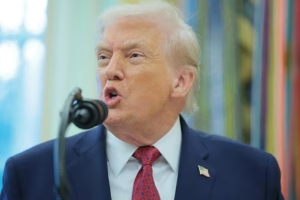
The deployment follows months of heightened diplomatic pressure from U.S. President Donald Trump, who has publicly criticised Nigeria’s handling of security challenges, particularly attacks on civilian communities.
While Christian populations have been repeatedly targeted, Muslim communities have also suffered violence in different parts of the country.
According to Nigerian government sources, the new arrivals will reinforce a smaller contingent of U.S. advisers already operating in the country, supporting Nigerian forces with tactical training in areas such as operational planning, intelligence analysis, and rescue coordination.
Both governments said the partnership is intended to strengthen Nigeria’s capacity to combat insurgency and armed militancy while preserving national sovereignty and command over all security operations.
Efforts to obtain official confirmation from Nigeria’s defense headquarters were unsuccessful as of the time of filing.