

State police bill scales second reading in senate despite constitutional objections
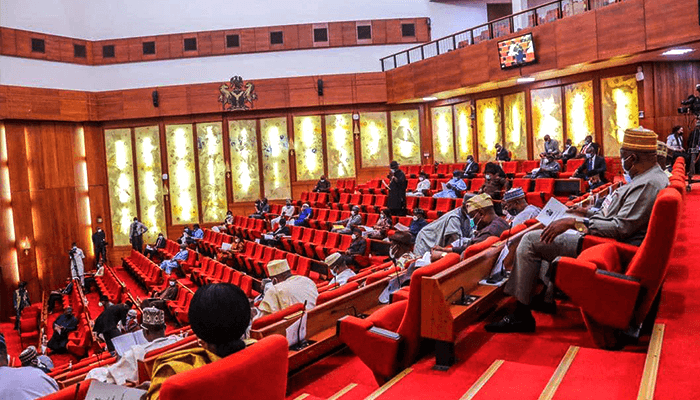
A bill seeking to establish state police and transfer policing powers to subnational governments has passed the second reading in the senate despite concerns over compliance with constitutional requirements for amending the 1999 Constitution.
The proposed legislation was referred to the senate ad hoc committee on the review of the 1999 Constitution for further consideration after scaling second reading on Thursday.
The bill, sponsored by Opeyemi Bamidele, senate leader and senator representing Ekiti central, seeks to establish federal and state police structures as part of efforts to strengthen Nigeria’s internal security architecture.
Leading the debate, Bamidele said the current centralised policing system has become inadequate in addressing the country’s growing security challenges.
He listed terrorism, banditry, mass abductions, farmer-herder conflicts, cultism, armed robbery, pipeline vandalism, communal clashes, and cyber-enabled crimes among the security threats confronting the country.
Bamidele said the bill seeks to move policing from the exclusive legislative list to the concurrent legislative list while creating state police service commissions and oversight mechanisms.
“The proposed amendment does not weaken national unity. Rather, it strengthens the federation by enabling each level of government to effectively discharge its constitutional responsibilities,” he said.
The senate leader acknowledged concerns that state governors could abuse state police structures but said the bill contains safeguards to prevent such outcomes.
He said the safeguards include state police service commissions, federal oversight through the federal police service commission, uniform national policing standards, legislative confirmation of senior appointments, and constitutional procedures for the removal of state commissioners of police.
“These are intended to create a balanced framework that combines operational autonomy with accountability and constitutional oversight,” Bamidele said.
“The individuals who understand the terrain, language, culture and peculiar security dynamics of a community are often best positioned to detect criminal activities before they escalate.”
He added that state police would improve intelligence gathering, facilitate rapid response to security threats, strengthen community policing and reduce the burden on the Nigeria Police Force (NPF).
“Modern policing relies heavily on intelligence rather than force. State police will significantly strengthen Nigeria’s intelligence architecture,” he said.
Bamidele also cited the United States, Canada, Australia, and Germany as examples of federal systems where subnational policing structures operate alongside federal law enforcement agencies.
Several senators spoke in support of the bill.
Advertisement
Tahir Monguno, senate chief whip and senator representing Borno north, said the proposal would provide a legal framework for the operation of state police and help address the proliferation of vigilante groups across the country.
However, Adamu Aliero, senator representing Kebbi central, raised a constitutional point of order, arguing that the senate should first comply with provisions governing constitutional amendments.
Aliero cited section 9 of the Constitution, which requires constitutional alteration bills to secure the support of not less than two-thirds of all members of each chamber and approval by at least two-thirds of state houses of assembly.
Advertisement
He noted that the senate had already constituted a committee chaired by Barau Jibrin, deputy senate president, to handle constitutional amendment proposals.
“We have collated all the bills, and they are currently discussing them. So, discussing this bill now proposed by the leader will amount to putting the cart before the horse,” he said.
Advertisement
“I support the idea of state policing, but we must comply with the provisions of the constitution.
“Otherwise, if we go ahead with this debate, whatever we decide, whatever we do, will be a nullity.”
Aliero added that while the current policing system is “grossly inadequate”, the senate must follow constitutional procedures in considering any amendment.
Following his intervention, the senate went into a closed-door session.
When lawmakers resumed from the executive session, the state police bill was no longer listed for consideration as the chamber proceeded to debate budget-related matters.
TheCable observed that senators present at Thursday’s plenary were fewer than the two-thirds majority required for constitutional amendment votes.
The proposal will now be considered by the senate committee reviewing the constitution alongside other amendment bills before any final vote is taken by the national assembly.
The house of representatives, however, passed the bill during plenary on Thursday.