Senate moves to probe crises rocking downstream oil sector
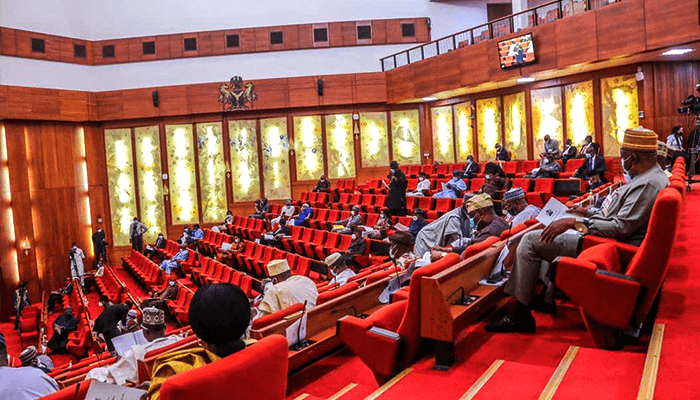
The Senate has expressed concern over the persistent challenges bedeviling Nigeria’s downstream petroleum sector and has announced plans to embark on a comprehensive investigation to address them.
Chairman of the Senate Committee on Petroleum (Downstream), Senator Kawu Sumaila (Kano South), disclosed this in a statement issued in Abuja on Thursday.
Nigeria’s downstream sector—which covers refining, distribution, and marketing of petroleum products—has in recent years faced crippling bottlenecks, including fuel scarcity, high pump prices, refinery shutdowns, and recurring industrial disputes.
Despite the enactment of the Petroleum Industry Act meant to reform and liberalize the oil industry, issues of regulatory overlaps, transparency deficits, and supply chain inefficiencies persist.
Sumaila explained that the move followed resolutions adopted at the committee’s recent retreat and was part of its Strategic Action Work Plan for ‘Q4 2025 to Q4 2026.’
According to him, the planned investigative hearing will “dissect all the problems and proffer solutions” to long-standing issues in the sector, including the operations of both private and government-owned refineries, disputes involving labour unions, and concerns over transparency and competitiveness.
He said, “The Senate Committee on Downstream Petroleum, pursuant to the resolutions of its recent retreat and in line with its Strategic Action Work Plan (Q4 2025–Q4 2026), hereby resolves to undertake a comprehensive investigative hearing on the current challenges in the downstream petroleum sector.
‘The hearing became necessary in view of the lingering concerns surrounding the operations of private refineries, government-owned refineries and independent marketers as well as ongoing disputes involving the Petroleum and Natural Gas Senior Staff Association of Nigeria, the National Union of Petroleum and Natural Gas Workers and other labour stakeholders.”
The senator further cited allegations relating to crude oil supply obligations, regulatory overlaps, labour rights disputes, transparency, and competitiveness within the sector.
According to him, the committee would provide “a fair, transparent, and inclusive platform” for all stakeholders—including refinery owners, regulators, labour unions, civil society groups, and marketers—to present their concerns and recommendations.
“The outcome of this investigative hearing will guide the Senate in reshaping the roles of the regulatory agencies in resolving industrial disputes, addressing systemic bottlenecks, safeguarding workers’ rights, and strengthening Nigeria’s energy security and transparency,” he said.