NASA Rocket Takes Off For Artemis II Moon Mission
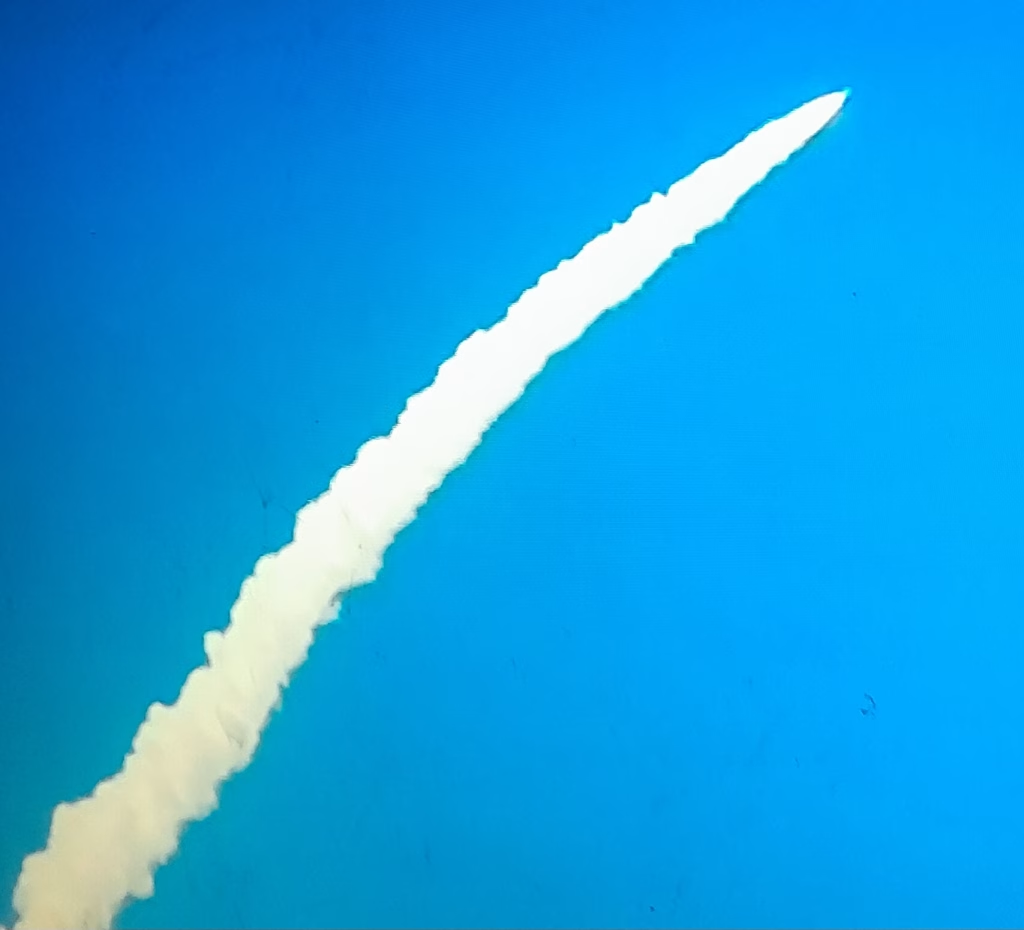
Four astronauts embarked on a high-stakes flight around the moon on Wednesday (Thursday AEDT), humanity’s first lunar voyage in more than half a century and the thrilling lead off in NASA’s push toward a landing in two years.
Carrying three Americans and one Canadian, the 32-story rocket rose from NASA’s Kennedy Space Centre where tens of thousands gathered to witness the dawn of this new era. Crowds also jammed the surrounding roads and beaches, reminiscent of the Apollo moonshots in the 1960s and ’70s. It is NASA’s biggest step yet toward establishing a permanent lunar presence.
The mission is a crucial, in-space dress rehearsal for the long-delayed Space Launch System rocket and Lockheed Martin-built Orion capsule, and marks the biggest milestone yet in NASA’s multi-year Artemis campaign to land humans on the moon as soon as 2028.
“Let’s go to the moon!” Artemis II commander Reid Wiseman earlier said, as all four astronauts in bright orange suits walked out of crew quarters, waving to cheering spectators and blowing kisses to their families, before heading to the capsule.
The Artemis voyages will attempt to repeat and then leapfrog feats achieved during the historic Apollo program that landed Neil Armstrong and 11 other men on the lunar surface in the 1960s and 1970s.
With Artemis – named after the twin goddess of Apollo – NASA aims to stay on the moon long-term. President Donald Trump’s NASA administrator, Jared Isaacman, has laid out a decade-long $US30-billion plan to set up a base on the moon where astronauts can live and work.
Isaacman has also sped through a significant makeover of the overall mission, including adding a test mission in 2027 that will send a crew to dock with one of the lunar landers being built by Elon Musk’s SpaceX and Jeff Bezos’ Blue Origin.
“America will never again give up the moon,” Isaacman said earlier this month when he unveiled the moon base plans.
New space race
The crew will spend roughly four days travelling to the lunar vicinity, where they will swing behind the moon’s far side – a vantage that is never seen from Earth. They are slated to perform a flyby of the lunar surface on April 6.
If the mission unfolds as planned, their trajectory will take them within only roughly 6618 kilometres of the moon during their closest approach, with the orb appearing about the size of a basketball in an outstretched hand in the capsule window.
Commanding Wednesday’s Artemis II mission is NASA astronaut Wiseman, a 27-year Navy veteran and former head of the agency’s astronaut office.
Flying with him are NASA astronauts Victor Glover, the mission’s pilot, and Christina Koch, a mission specialist who conducted the first all-female spacewalk. They are joined by Canadian astronaut Jeremy Hansen, who will be flying to space for the first time on this trip.
Roughly 3½ hours after launch, Glover will steer Orion up close to a piece of the SLS rocket while in orbit, demonstrating the ability to closely approach another spacecraft. The same manoeuvring will potentially be used to dock Orion with future lunar landers that will take astronauts down to the surface of the moon.
On the second day of the flight, the Orion spacecraft will ignite its main engine, sending the crew en route to the moon.
The US is racing to get back to the moon before China sends its own astronauts there for the first time, a goal Beijing has set for before the end of the decade.
Many China hawks, including US Senator Ted Cruz of Texas, have cast Artemis as a race for a strategic foothold in space, sometimes referred to as the “ultimate high ground” for war.
China has yet to send people to the lunar surface but has notched several achievements, including the only landings on the moon’s far side. The nation is also leading a project to build an international research station near the lunar south pole.
The Artemis II mission is notable for its numerous “firsts”. Koch will be the first woman to fly near the moon, while Glover will be the first black astronaut to do the same. Hansen will also become the first Canadian to fly to the moon.
The mission marks just the second flight of the SLS rocket, which has fallen many years behind schedule. The rocket and Orion have suffered various schedule delays and cost overruns, which have pushed back the entire Artemis program.
“Human spaceflight is at the core of the institution of NASA going back to Apollo, and the self-identity of a large swath of the agency,” said Casey Dreier, chief of space policy at the Planetary Society, a space advocacy group.
After the NASA crew flies by the moon, gravity will pull them back to Earth.
On the 10th day of the mission, their capsule will re-enter the planet’s atmosphere, and they will descend under parachutes and splash down in the Pacific Ocean.
A recovery ship and a team of divers with NASA and the US Navy will meet up with the capsule to pull the crew out of the water.
Source: NASA, Financial Review