
MTEF: Natasha queries FG’s plan to ‘mop funds’ for private sector
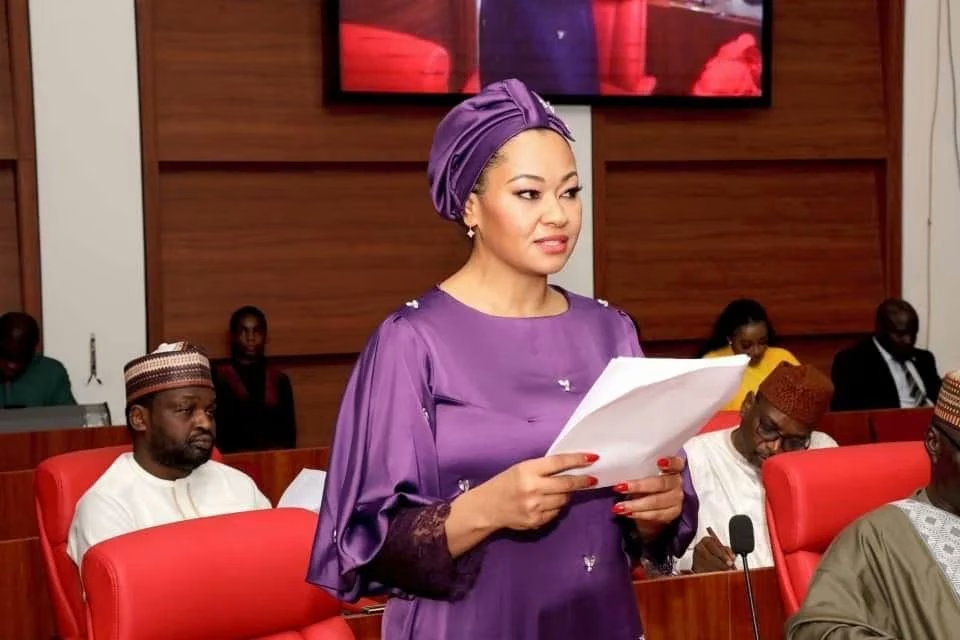
Senator Natasha Akpoti-Uduaghan (Kogi Central) Monday queried the Federal Government over what she described as vague policies on private-sector funding contained in the 2026–2028 Medium Term Expenditure Framework and Fiscal Strategy Paper.
The lawmaker raised the concerns during an interactive session organised by the Senate Committee on Finance at the National Assembly, where the Minister of Finance and Coordinating Minister of the Economy, Wale Edun, presented the government’s fiscal outlook.
Reacting to the Minister’s claim that the government plans to “mop up funds” to support the private sector, Akpoti-Uduaghan said the explanation lacked clarity, especially in the face of rising taxes and economic hardship.
“Speaking to the closing part of your presentation where you mentioned that the government is trying to mop funds to support the private sector, I find that quite generic and bland,” she said.
The senator then asked the Minister to clarify the source of the funds, questioning whether they would come from taxes, levies or other means.
“Kindly explain where these monies will be mopped from to support the private sector. Is it from taxes, duties, levies, dormant accounts, and so much, because we have seen an outcry from the public with regard to heavy taxation?” she asked.
She also sought details on how businesses would access the funds and the criteria that would be used to select beneficiaries.
“How exactly will the private sector access these funds? Will it be through banks and the heavy interest rates, or are they going to be grants? How do you select the beneficiaries from the private sector, and what are the criteria, terms, or conditions for these loans or grants?” she queried.
Akpoti-Uduaghan further asked whether the funds would be used to address infrastructure gaps affecting businesses.
“Will these funds be used to provide the enabling environment and infrastructure necessary to support entrepreneurs—such as electricity, free internet access in public spaces, roads, and others? Exactly what will these funds be used for, and how will the private sector access them?”
In his response, Edun said the government was looking at mobilising domestic savings, citing examples from countries such as South Korea, Singapore and China.
“The Koreas of this world, the Singapores of this world, the Chinas, they did it by mobilising their own savings,” he said.
“When they produce, they don’t consume everything; they put some back into productive savings.”
The Minister added that discussions were ongoing on a national savings scheme, stressing that participation would be voluntary.
“It will be voluntary; it’s not taxation, it’s not compulsory. It’s giving people a chance to have unearned income at all levels,” Edun said.
“By that, we mobilise funds even at the grassroots level to complement development programmes that push resources down.”
However, the Minister did not give specific details on the source of the funds, how they would be accessed or how they would be deployed.
Akpoti-Uduaghan’s questions highlighted growing concerns in the Senate over the lack of clarity in key fiscal policies as lawmakers continue scrutiny of the MTEF ahead of the 2026 budget.