

Anti-Migrant Group Blocks Migrants From Health Clinics In South Africa
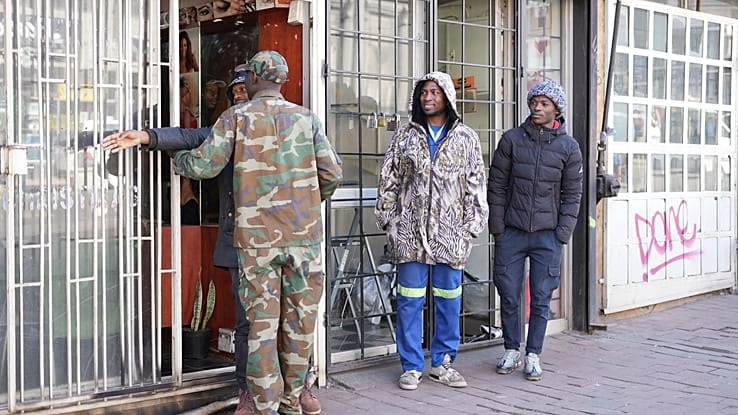
An anti-migrant group under the aegis of Operation Dudula has stopped foreigners from accessing public health clinics in South Africa.
According to reports, members of the group blocked clinic entrances, demanding local identity documents, and turned away people without them.
It would be recalled that the Johannesburg High Court has ruled the group’s actions unlawful, and South Africa’s government says health care is available for all under the law.
But Operation Dudula’s popularityå is rising in a country that has seen waves of sometimes deadly anti-migrant sentiment.
Operation Dudula member Tholakele Nkwanyana was one of the first people to arrive at the Diepsloot public health clinic in Johannesburg, not to seek medical attention but to stop foreigners from getting care.
She and fellow members of Operation Dudula, which means “to get rid of by force”, are dressed in military-style fatigues as they block the entrance and demand to see patients’ identity documents.
Mothers carrying children and others who are sick are turned away and told to go to private hospitals, which, unlike public ones, aren’t free.
Similar scenes have played out at government-run clinics across South Africa’s most populous province, Gauteng, as healthcare becomes the new battleground in the country’s long and painful debate over immigration.
The Johannesburg High Court has ordered Operation Dudula to stop harassing migrants. The group says it will appeal.
Dale McKinley, a spokesperson for Kopanang Africa Against Xenophobia, condemned the group.
“We cannot have private citizens; we cannot have vigilantes running around arresting people or demanding certain things. This is just a basic rule of law,” he said. “The only people who are allowed to ask others are government officials.”
McKinley also highlighted that there are, in fact, many South African nationals without documentation.
South Africa boasts the continent’s most developed economy and attracts migrants from neighbouring Zimbabwe, Mozambique, and Lesotho, as well as from as far away as Nigeria and Ethiopia.
In the year ending March 31, the Department of Home Affairs deported 46,898 migrants who had entered South Africa without documentation, an 18% increase from the previous year.
Operation Dudula emerged a few years ago, and its visibility has grown as mostly young Black South Africans take part.
It’s not clear how many members the group has. Its actions have included closing down foreign-owned shops and blocking the children of foreigners from entering public schools.
Operation Dudula members assert that migrants entering without documents are taking jobs from South Africans, who face one of the world’s highest unemployment rates at over 31%.
South Africa has seen sometimes deadly waves of such sentiment. In 2008, 68 people were killed in attacks on foreigners across the country.
South Africa’s government has condemned Operation Dudula’s actions and insists that the law guarantees health care for everyone, including foreigners in the country illegally.
“We are healthcare professionals. We don’t turn patients away because they don’t have documentation,” Health Minister Aaron Motsoaledi has said.
He and others have met multiple times with Operation Dudula, and the government has posted security at public clinics. Still, police are overstretched in a country with a high crime rate.