
INEC:2027 Will Produce Nigeria’s Best Elections, Free of Technical Glitches
Independent National Electoral Commission (INEC) has assured Nigerians that the technical glitches experienced during the 2023 presidential election would not reoccur in 2027.
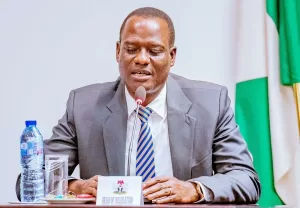
INEC Chairman, Professor Joash Amupitan, gave the assurances yesterday in Abuja at the Citizens’ Townhall on the Electoral Act 2026.
Amupitan said next year’s general election would be the best in the history of the country.
The electoral body had on Friday announced that the presidential and National Assembly elections would hold on Saturday, January 16, 2027, while the governorship and state Houses of Assembly Elections would now hold on Saturday, February 6, 2027.
The commission had earlier fixed the presidential and National Assembly elections for February 20, 2027, and the governorship and state Houses of Assembly elections for March 6, 2027, before it changed the dates in line with the 2026 Electoral Act.
The change in the timetable and schedule of activities for the 2027 general election became imperative following President Bola Tinubu’s assent to the Electoral Act amendment bill recently passed by the National Assembly.
Section 60(3), which guarantees electronic transmission of results, had been the bone of contention since the 2026 Electoral Act came into effect
It was against this background that opposition parties called for an immediate amendment to the Electoral Act 2026, describing it as anti-democratic and skewed ahead of the 2027 elections.
But speaking at the town hall meeting, Amupitan revealed that as part of efforts to test its result-transmission infrastructure and prevent a repeat of past technical setbacks, the commission would conduct a mock presidential exercise ahead of the 2027 general election.
He stated, “Election anywhere in the world is now about technology, but before deploying any technology, it is important to test it thoroughly
“So, my own audit of the 2023 election, while the BVAS was tested within the states for the Osun election, Ekiti election, however, when it came to the federal election, especially the presidential election, which became inter-state, it was not properly tested.”
Amupitan said, “One of the things we are trying to do before the election is to have a mock presidential election, so that we are sure that this transmission across the state must not fail.
“The glitch is eliminated. By God’s grace, it will not surface in Nigeria. By the grace of God, the 2027 election will be the best Nigeria has ever had. The electorate of 2027 is more aware and understands the direct correlation between elections and national development.
“We want a process that guarantees the legitimacy and confidence people want to see in their system. When people trust INEC and their leaders, the country will move forward.”
Amupitan acknowledged that while perfection might be difficult to attain, the commission was working to deliver significant improvements.
According to him, “We will try to give Nigerians a near-perfect election. Credible elections remain the lifeblood of democracy.”
The INEC chairman identified logistics and result management as critical operational challenges facing the commission.
He stated, “So, result management and logistics are two basic issues that, from our own end, we’re trying to see how best we’re able to manage them very well, so as to enhance the transparency and credibility of the system.”
Amupitan explained that network availability — rather than the concept of electronic transmission itself — remained the major hurdle.
INEC Begins Broad Review of Party Regulations to Safeguard Election Integrity
INEC commenced a comprehensive technical review of its Regulations and Guidelines for political parties to align them with the recently assented Electoral Act 2026 and emerging electoral realities.
The exercise, convened under Amupitan, represented a critical phase in the comission’s ongoing reform agenda aimed at strengthening political party oversight, improving compliance culture, reducing pre-election disputes, and enhancing public confidence in Nigeria’s democratic process.
The electoral body said aligning party regulations early with the Electoral Act 2026 would significantly reduce pre-election litigation and administrative disputes that often diverted attention from election preparation and delivery.
Chief Press Secretary to the INEC chairman, Adedayo Oketola, in a statement, yesterday, said the Technical Workshop on the Revision of the INEC Regulations and Guidelines for political parties would bring together National Commissioners and Directors across operational departments, legal experts, election administrators, and institutional stakeholders to undertake a detailed clause-by-clause review of the existing 2022 framework.
Oketola stated, “The recently enacted Electoral Act 2026 introduces significant legal and operational changes affecting political party administration, candidate nomination processes, compliance obligations, dispute resolution mechanisms, and the Commission’s regulatory mandate.
“Consequently, INEC is reviewing its subsidiary regulations to ensure full legal alignment and operational clarity well ahead of the next electoral cycle.”