

Senate to address N1.3bn fake presidential council scandal as forged appointment letter details emerge
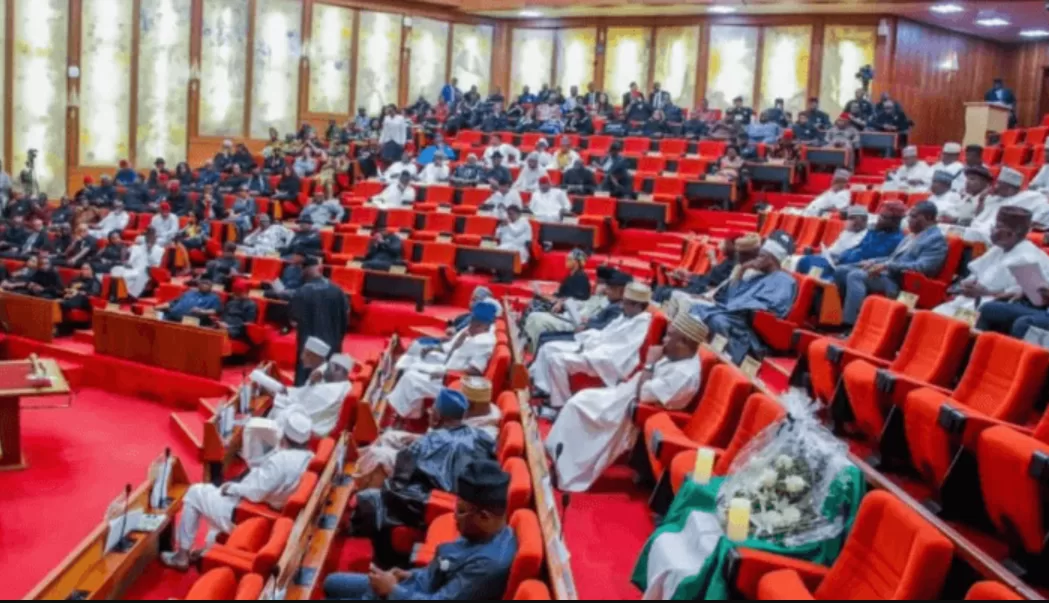
The Senate is expected to address the controversy surrounding the N1.3 billion allocation to the controversial Presidential Foreign Intervention Promotion Council in the 2026 Appropriation Act when plenary resumes on Tuesday.
The development comes amid fresh revelations that the alleged mastermind behind the council secured government recognition using a forged appointment letter bearing the falsified signature of the Chief of Staff to the President, Femi Gbajabiamila.
According to findings by The PUNCH, Prince Adeniyi Adeyemi allegedly used the forged document to obtain office space at the Federal Secretariat Complex in Abuja, enabling the council to operate for more than a year with the appearance of a legitimate government agency.
The report also revealed that the N1.3 billion allocation was approved without Adeyemi or any official of the council appearing before the Senate Committee on Establishment and Public Service to defend the proposed budget.
A National Assembly source, who spoke on condition of anonymity, alleged that the budget provision was inserted through a “backdoor arrangement.”
“It was not brought in as a stand-alone item. It was done collectively with others that came in directly from the Presidency, so there was no defence or oversight,” the source said.
The source added that the Senate leadership is expected to address the issue when lawmakers reconvene on Tuesday in an effort to calm growing public concern and address allegations of complicity.
Meanwhile, multiple sources in the Presidency and the civil service said the alleged fraud succeeded because bureaucratic safeguards failed at several stages, including within the Budget Office, the House of Representatives and the Civil Service Headquarters.
According to the sources, officials failed to properly verify the authenticity of the appointment letter, allowing the council to gain credibility and interact with government ministries, diplomatic missions, the National Assembly and private organisations.
One Presidency official explained that the appointment process outlined in the forged document did not comply with established procedures.
“In government, appointments to agencies under the Presidency are made by the President, while appointment letters are issued by the Secretary to the Government of the Federation (SGF). The Chief of Staff does not appoint directors-general or heads of agencies,” the source said.
A senior civil servant familiar with the case alleged that Adeyemi exploited this administrative loophole.
“He presented a forged appointment letter carrying the fake signature of the Chief of Staff and requested office accommodation at the Federal Secretariat. Officials accepted the document without verifying whether the Chief of Staff had the authority to make such an appointment,” the official said.
The source noted that once office space was allocated, the council appeared legitimate.
“Having an office inside the Federal Secretariat gave the organisation credibility. It had official letterheads, a website and conducted meetings with high-profile visitors. That legitimacy discouraged further scrutiny until questions were eventually raised,” the source added.
The official confirmed that the office was sealed after Adeyemi’s arrest and later reassigned, although he allegedly continued operating outside the secretariat.
Another Presidency source said the alleged fraud first came to light after officials of the Nigerian Investment Promotion Commission observed that the council was performing functions that overlapped with the commission’s statutory responsibilities.
According to the source, the matter was reported to the Chief of Staff, who immediately denied any knowledge of Adeyemi and referred the case to the Department of State Services for investigation.
“At one of the meetings, the Chief of Staff stated clearly that he had never met the individual and had no involvement with him. He ensured the matter was pursued until Adeyemi was arraigned in court and granted bail,” the source said.
However, the insider claimed that the prosecution lost momentum after the initial arrest.


