
EU to deploy electoral expert mission for Nigeria’s 2027 polls
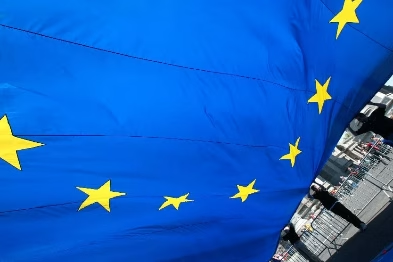
The European Union has dismissed reports that it rejected an invitation from the Independent National Electoral Commission to observe Nigeria’s 2027 general elections, saying it will instead deploy an Electoral Expert Mission comprising two to four independent experts.
The EU Delegation to Nigeria and ECOWAS, in a statement issued on Monday by the EU Ambassador to Nigeria and ECOWAS, Gautier Mignot, said it had accepted INEC’s formal invitation and that the decision to deploy the mission was based on the prevailing circumstances and available resources.
The clarification followed reports claiming that the EU had declined INEC’s invitation, citing the worsening security situation in the country and alleged hostile treatment of its observers and officials following the publication of its final report on the 2023 general election.
The EU Delegation described the reports as inaccurate, saying the two reasons cited were not contained in its correspondence with INEC.
“The EU Delegation confirms that it received a formal invitation (not a request) from the INEC, dated 17 April 2026, to deploy observers for the 2027 General Elections,” the statement said.
It added that in its response dated July 28, 2026, the delegation “thanked the INEC for its kind invitation and informed that the EU will field an Electoral Expert Mission (EEM), composed of two to four independent experts, who will formally be accredited as observers with the INEC.”
Explaining the mandate of the mission, the EU said, “An EEM, like an Electoral Observation Mission, assesses whether the electoral process is conducted in line with international, regional and national obligations and commitments on the conduct of democratic elections to which the country has subscribed.”
According to the delegation, the mission will submit a final report containing recommendations on improving Nigeria’s electoral framework and future electoral processes.
“The EEM submits a final report with recommendations on how to improve the electoral framework and future electoral processes, the report will be shared with the government, and if they agree, it can also be released to the wider public,” it stated.
The EU further rejected the reports’ claims about the reasons for its decision, describing them as speculation.
“The EU Delegation further underlines that the two alleged reasons mentioned in the press reports do not appear in the letter: these are pure speculations,” it said.
The delegation explained that the EU makes annual decisions on the type of electoral missions to deploy to partner countries that invite it, taking into consideration individual circumstances and available resources.
“It is on this basis that the decision to conduct an EEM in Nigeria has been taken and will be further consulted with the relevant Nigerian authorities for its implementation,” the statement said.
The EU also said the decision would not affect its support for Nigeria’s democratic and electoral processes, including its EU-funded Support to Democratic Governance in Nigeria project.
The Union urged the media to verify reports concerning the EU’s positions or statements with its press and communication office before publication.
“This decision does not affect in any way the continuation of the implementation of the EU-funded project ‘Support to Democratic Governance in Nigeria’ including its dimension of support to the electoral process.
“The EU Delegation respectfully reminds members of the esteemed media community that, to avoid issuing such misleading information about positions or statements of the EU, they can simply check their accuracy with the press and communication office of the EU Delegation,” it said