
Tinubu Says Economic Reforms Averted State Fiscal Crisis as Nigeria Records Signs of Recovery
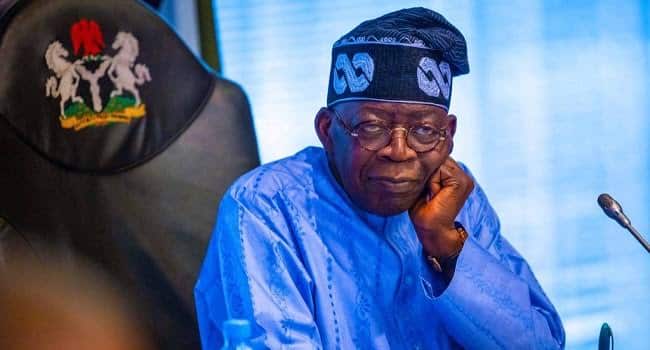
President Bola Tinubu has defended his administration’s economic reform agenda, stating that Nigeria has moved away from the brink of fiscal distress and is now witnessing measurable signs of economic recovery, improved state finances, and renewed infrastructure development.
Speaking on Friday while receiving members of the Nigeria Governors’ Forum (NGF), led by Vice President Kashim Shettima, during a Sallah homage at his Lagos residence, the president said the country’s economy had stabilised despite the difficult adjustment period that followed the implementation of major economic reforms.
Tinubu described his path to the presidency as politically challenging, noting that many governors and party stakeholders supported his candidature despite uncertainty over the policy direction his administration would eventually pursue.
According to the president, the reforms introduced since May 2023 have helped Nigeria avoid a deeper economic crisis and laid the foundation for sustainable growth.
“Instead of bankruptcy, Nigeria has survived. The economy has recovered. It is growing. Agriculture is humming. Food is here,” Tinubu said.
The president commended state governors for helping to maintain public confidence and social stability during the implementation of reforms that included the removal of fuel subsidies, foreign exchange market adjustments, and broader fiscal restructuring measures.
” You persuaded our people to be patient and endure these years of painful reforms while we reset the economy. Today, the benefits are beginning to emerge,” he stated.
Tinubu pointed to improving macroeconomic indicators, ongoing infrastructure projects, and increased activity in the housing sector as evidence that the economy is gradually responding positively to policy interventions.
A key highlight of the president’s remarks was the improved fiscal position of state governments. He noted that many states that previously depended on federal government interventions to meet recurrent obligations are now better positioned to finance their operations independently.
“I am glad that out of the 27 governors borrowing from the federal government and seeking interventions, we are no longer struggling to pay salaries,” he said.
Earlier, the Minister of Information and National Orientation, Mohammed Idris, stated that approximately 27 states faced severe fiscal challenges before the current administration took office, with several unable to meet salary obligations.
According to the minister, the reforms implemented by the Tinubu administration helped prevent widespread fiscal collapse at the subnational level.
The President also highlighted the economic potential of major infrastructure projects, particularly developments along the Sokoto–Badagry corridor, which he said could support irrigation, agricultural expansion, electricity generation, and broader economic activities across multiple states.
Tinubu further urged governors to maximize agricultural opportunities within their jurisdictions, emphasizing that food security and agricultural productivity remain central pillars of the administration’s economic strategy.
He expressed confidence that Nigeria can achieve food sovereignty if states effectively utilize available arable land and invest in agricultural value chains capable of boosting domestic production and reducing dependence on food imports.
Economic and Fiscal Implications
The President’s remarks underscore the administration’s position that recent economic reforms are beginning to deliver fiscal and macroeconomic gains. Improved state revenues, stronger fiscal capacity, and reduced reliance on federal bailouts could enhance subnational investment in infrastructure, healthcare, education, and social services.
For investors, the continued improvement in state finances and macroeconomic stability may strengthen confidence in Nigeria’s economic outlook, particularly if reforms translate into sustained growth, lower inflationary pressures, and increased productivity in agriculture and infrastructure development.
However, analysts note that while headline indicators have shown improvement, the long-term success of the reforms will depend on sustained implementation, job creation, improved living standards, and the ability of economic growth to translate into tangible benefits for households and businesses across the country.