
Nigeria ends 20-yr airport dispute, shifts regional flights to ease Lagos gridlock
The long-awaited commencement of regional operations at Murtala Muhammed Airport Terminal Two (MMA2) is being hailed as a remedy for Lagos’ saturated international wing. The move is expected to expand passenger choice and alleviate chronic congestion at Nigeria’s busiest international gateway.
However, industry stakeholders warn that a critical infrastructure deficit may stall its success. This shift occurs as Murtala Muhammed International Airport (MMIA) faces mounting pressure, driven by an 11.8% growth in air traffic in 2025 — the fastest recorded in Africa. Currently handling more than 4.3 million annual international passengers, the facility struggles with apron constraints and terminal saturation.
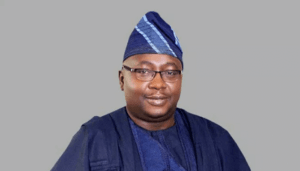
The recent 20-year legal settlement between the federal government and Bi-Courtney Aviation Services Limited was intended to act as an emergency pressure release, yet the operational readiness of the secondary terminal remains under scrutiny. Seyi Adewale, Mainstream Cargo Limited CEO, holds a different opinion.
According to Adewale, moving regional flights to MMA2 will certainly reduce the present congestion at the international wing. He noted that all airlines are currently cramped into Terminal 2 due to reconstruction work at Terminal 1. Passengers will now have a choice of terminals and can compare based on their prior experience at the international airport.
Airline competition and passenger access
”It is anticipated that some airlines will prefer to operate from the international wing, whereas others may move to the domestic wing based on their opportunity cost,” Adewale said.
He noted that MMA2 will attempt to attract airliners with frequent regional flights. Passengers will also have better access to their vehicles and the local airport road, unlike the international wing which has significant restrictions.
Last year, United Nigeria Airlines marked its inaugural flight to Accra, Ghana, becoming the third airline to start operations on the West Coast after Air Peace and Ibom Air. United Nigeria used a Bombardier CRJ 900 for the route but hinted it would eventually service it with the E145, which has a 50-passenger capacity.
Other foreign airlines compete for regional flights, including Africa World Airlines (AWA), based in Accra, and Asky Airlines, based in Lome. AWA runs two frequencies to Lagos and aspires to increase this to three times daily. Currently, Air Peace flies to at least nine regional destinations in West and Central Africa, including Abidjan, Banjul, Dakar, Douala, Freetown, and Monrovia.
While Air Peace connects several destinations, it does not match the seamlessness of Asky. Asky operates in an airport without a domestic wing, allowing for easy passenger transit through its Lome hub. With the surge in regional flight operations, stakeholders say the added facility will make travel to African destinations more seamless.
Despite the terminal’s domestic track record, critics argue that the absence of dedicated remote parking and airside connectivity could turn a decongestion strategy into a logistical bottleneck. Aircraft Owners and Pilots Association of Nigeria president Alex Nwuba warns of a significant “transfer trap” for international travellers.
Because Lagos lacks an integrated airside transfer system, passengers connecting from intercontinental routes to regional flights at MMA2 must still clear immigration, collect baggage, and physically exit the airport to re-enter the domestic terminal. This fragmented process increases travel time and reduces the convenience offered by modern hubs like Accra or Lome.
Nwuba explained that the approval will only partially decongest Lagos International Airport. While shifting departures to MMA2 reduces outbound load, the core congestion drivers—international arrivals, transfer passengers, and apron limitations—remain unchanged. All international arrivals will still funnel through the main terminal, meaning arrival congestion and baggage hall pressure remain unaffected.
MMA2 itself faces constraints such as limited expansion space due to the nearby Air Force base and restricted apron capacity. Nwuba said that while the policy aligns with decentralising traffic, the operational reality is that without major investment in terminal expansion and integrated transfer infrastructure, the move will instead create a dual-terminal regional flights.
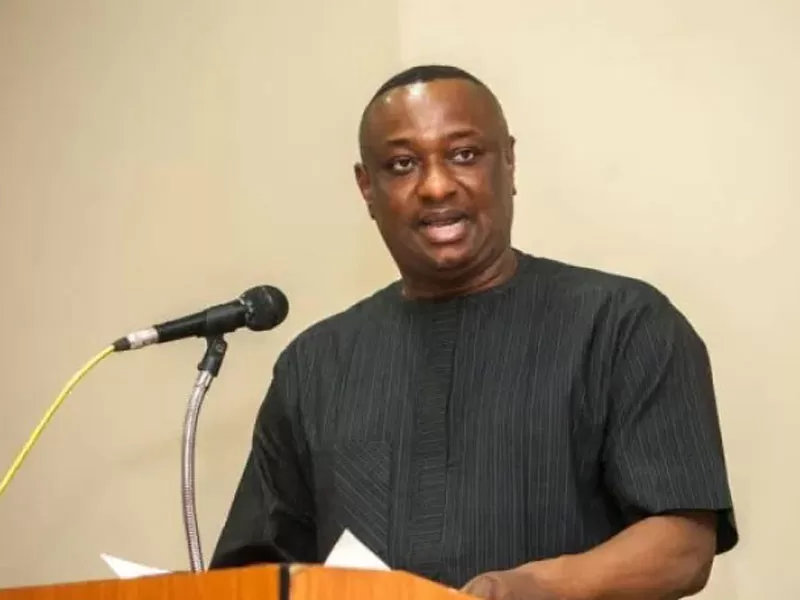
The concession of the facility to Bi-Courtney has been a longstanding issue. Approval to run regional flights was withdrawn under former president Goodluck Jonathan, despite the company’s investment of more than N600m. Aviation and Aerospace Development Minister Festus Keyamo announced the new development on Thursday following a Federal Executive Council (FEC) meeting.
Keyamo said the agreement reached with Bi-Courtney leader Wale Babalakin resolves issues dating back to 2003. A major point of contention was Bi-Courtney’s claim that the concession covered the adjacent MMA1 domestic terminal—a position upheld by the Supreme Court.
New terms and revenue sharing
Bi-Courtney has agreed to waive the debt, return MMA1 to federal government control, and drop exclusivity clauses. In return, the government has restored the concession for a stalled hotel and conference centre project opposite MMA2. The deal also activates revenue-sharing between the federal government and the concessionaire.
”Immediately after today, the federal government will now begin to earn its own share from the operations of MMA2,” Keyamo said. However, industry expert and Centurion Aviation Security and Safety Consult CEO John Ojikutu told BusinessDay that the terminal will only decongest the international wing if management facilitates it properly.
Ojikutu noted that regional flight facilitation was part of the 2006 concession, but problems began with successive administrations. He compared the situation to the sale of the Port Harcourt refineries, suggesting the delays were political rather than policy-driven.
”What is happening in Nigerian commercial aviation is never meant for national development and progress, but for personal gains or interests,” Ojikutu explained. He recalled that Virgin Nigeria and Arik were assigned to operate from MMA2 in the early 2000s but refused.