Poverty rate in Nigeria jumps to 63% after fuel subsidy removal, study finds.

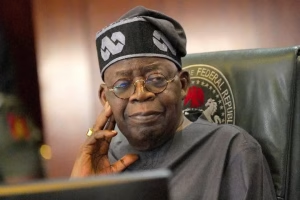
A new study has found that about 63% of Nigerians fell below the poverty line following the removal of petrol subsidies, highlighting the short-term welfare impact of recent economic reforms implemented by the government of Bola Ahmed Tinubu.
The research was presented at a policy dialogue organised by Agora Policy in Abuja, where policymakers, economists, and civil society leaders gathered to assess the social and economic effects of Nigeria’s reform agenda.
According to the study, Nigeria’s national poverty headcount rose sharply from a baseline of 49.8% to roughly 63% after the fuel subsidy removal before moderating slightly following the introduction of social protection measures.
Welfare Impact of Economic Reforms
The study, presented by Mohammed Shuaibu, a senior lecturer at the University of Abuja, examined the effects of key reforms, including the removal of the petrol subsidy and adjustments to electricity tariffs.
Nigeria officially ended its decades-long fuel subsidy on May 29, 2023, when President Tinubu announced the policy shift during his inaugural address.
According to the study, the policy triggered broad price increases across the economy, affecting transport, energy costs, and household purchasing power.
“After the subsidy removal, poverty increased from about 50% to 63%,” Shuaibu said during the presentation.
However, he noted that government interventions such as cash transfer programmes helped partially cushion the shock.
“When social protection measures were introduced, the poverty rate moderated to around 56.2%,” he added.
Consumption and Living Standards Decline
The analysis found that the removal of subsidies significantly reduced household consumption across income groups.
Rising transport and energy costs forced many families—particularly those in rural and low-income urban communities—to reduce spending on basic needs.
Households reported adopting survival strategies such as:
Cutting food and household consumption
Reducing transport usage
Rationing electricity
Borrowing money to cover essential expenses.
Households adjusted to the shocks not through recovery but through sacrifice,” Shuaibu said.
The study also found that the national poverty gap—a measure of how far poor households fall below the poverty line—rose from 31.6% to more than 45% after the subsidy removal.
Macroeconomic Effects of Reform Policies
Beyond household welfare, the research assessed the broader economic consequences of electricity tariff reforms.
The findings showed that electricity price adjustments led to a modest increase in consumer prices, initially raising inflation by about 0.26%, later rising to 0.52% after accounting for social protection programmes.
However the reforms also produced a small positive effect on economic output, with real GDP increasing by about 0.42%, before moderating to 0.21% when government intervention costs were included.
Firm-level investment also recorded slight gains following electricity reforms, although these were partly offset by rising operational costs.
Central Bank Explains Reform Rationale
Speaking at the event, Muhammad Abdullahi, Deputy Governor for Economic Policy at the Central Bank of Nigeria, said the reforms were necessary to correct deep structural imbalances in the Nigerian economy.
He revealed that Nigeria’s oil revenue had declined sharply over the past decade.
According to Abdullahi, crude oil earnings fell from about $92 billion in 2012 to less than $2 billion in 2023, contributing to severe fiscal pressures.
The CBN also inherited major foreign exchange challenges, including a backlog of about $7 billion in FX obligations, of which $4.5 billion has already been cleared.
He added that Nigeria’s net foreign reserves were previously far weaker than reported.
While official reserves stood at about $32 billion, much of the funds were tied to swaps and borrowings, leaving net reserves at roughly $800 million before reforms began.
Business Sector Still Under Pressure
Private sector representatives at the dialogue said the reforms had corrected several long-standing distortions but had also created significant operational challenges.
Chinyere Almona, Director-General of the Lagos Chamber of Commerce and Industry, said rising fuel and electricity costs have significantly increased business operating expenses.
She noted that the removal of petrol subsidy alone could save the government about $7.5 billion annually, funds that should be channelled into infrastructure and economic development.
“The economy is improving at the macro level, but those improvements have not yet translated into relief for ordinary Nigerians and many small businesses,” Almona said.
Calls for Stronger Social Protection
Economists and development experts at the event urged the government to strengthen social safety nets to cushion vulnerable populations during the transition.
Samer Matta, Senior Economist for Nigeria at the World Bank, called for the expansion of social protection programmes and improvements to the National Social Register to ensure targeted assistance reaches the poorest households.
Participants at the dialogue agreed that while Nigeria’s reforms may deliver long-term economic benefits, stronger safety nets and sustained public engagement will be essential to maintain support for the reform agenda.
GFD