
Former Nigerian President Olusegun Obasanjo Says ‘He Still Doesn’t Know His Real Age’
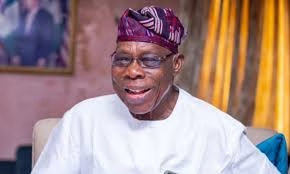
Former Nigerian President Olusegun Obasanjo has revealed he still doesn’t know his exact age, relying on his surviving primary school classmates, all likely over 90, as his only reference point. He made this admission at the Toyin Falola Interview Series, saying he’s uncertain about his birthdate.
The former president said many of his contemporaries from early childhood are still alive and that their ages suggest he is likely above 90, though he still cannot definitively state his own birth year.
He said, “I don’t know my exact age but I could judge from those who were in school with me, I have given you an example of Olubara (Oba Jacob Olufemi Omolade, the Olubara of Ibara) who is still alive.
“I believe there are six of my classmates in secondary school that I know are still alive and none of them is less than 90 years of age. So I leave it to you to guess what my age could be.”
Obasanjo also used the platform to speak extensively about the purpose of the Olusegun Obasanjo Presidential Library (OOPL), describing it as an institution designed to preserve national history and strengthen Nigeria’s institutional memory.
He said, “We have digitalised over 3m materials. We still have about the same number, 3 million to digitalise.
“The idea is when these materials are digitalised, people can have access to them. That is number one. As document preservation, we preserve the past, take note of the present and we want all these to inspire the future.”
He noted that the archive includes his personal academic records, private letters, and historic correspondence, including a letter he wrote to the late General Sani Abacha after the death of his son and another sent to his wife during his imprisonment.
He said, “My school record cards in primary school, I have been able to keep them and when I became President and I wanted to establish the library, they were available to be exhibited.
“My records from primary and secondary school are still with me, carefully preserved through the years. Even the manuscripts of the books I wrote — including those I penned while in prison — have survived. The maize crops I planted during my time behind bars also remain as part of my journey. Somehow, through all the challenges, I managed to keep them.”
“Why the Presidential Library? I believe one of the things we don’t do too well in our society is that we don’t keep records too well, institutional memory is not what we do very well.”